
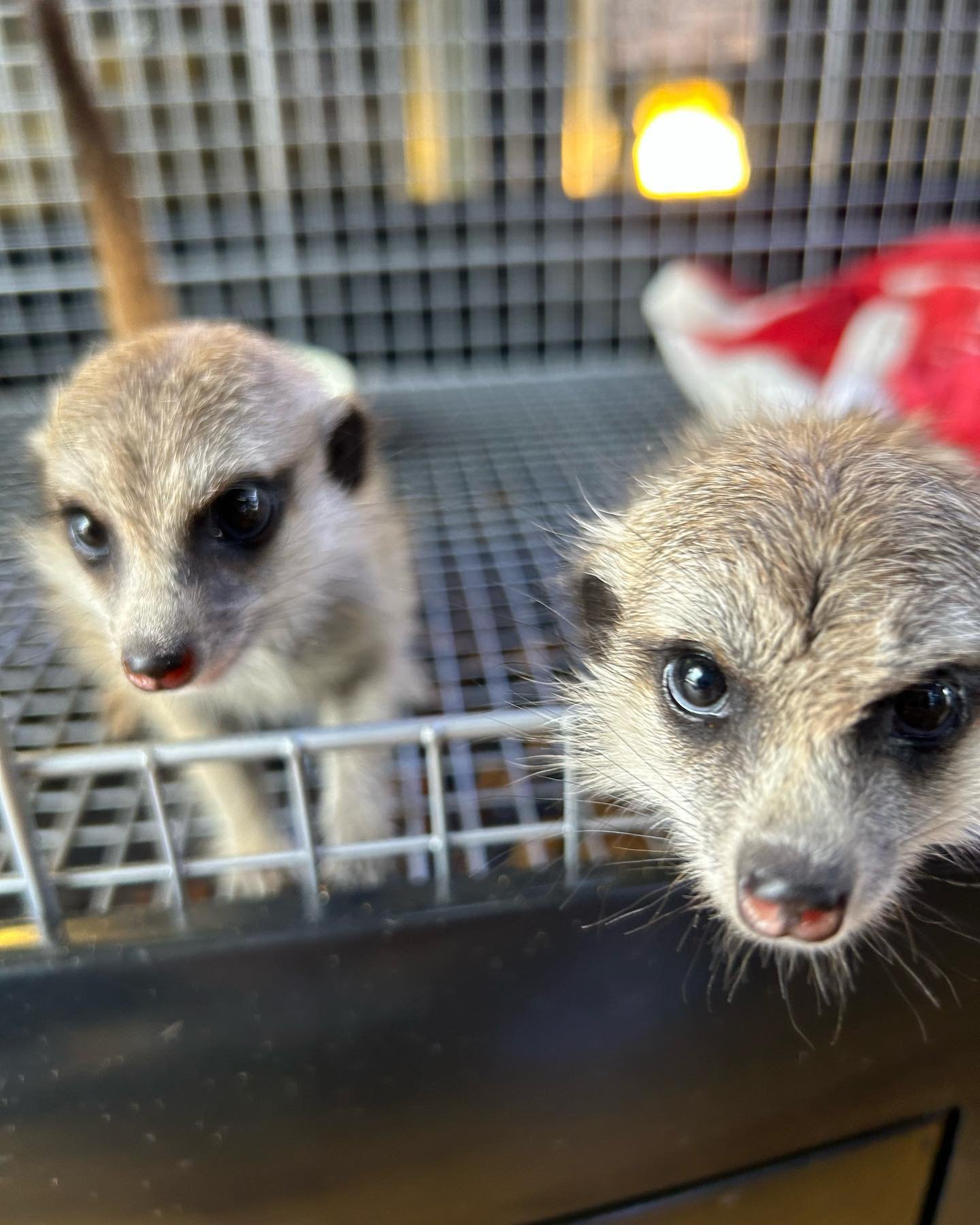
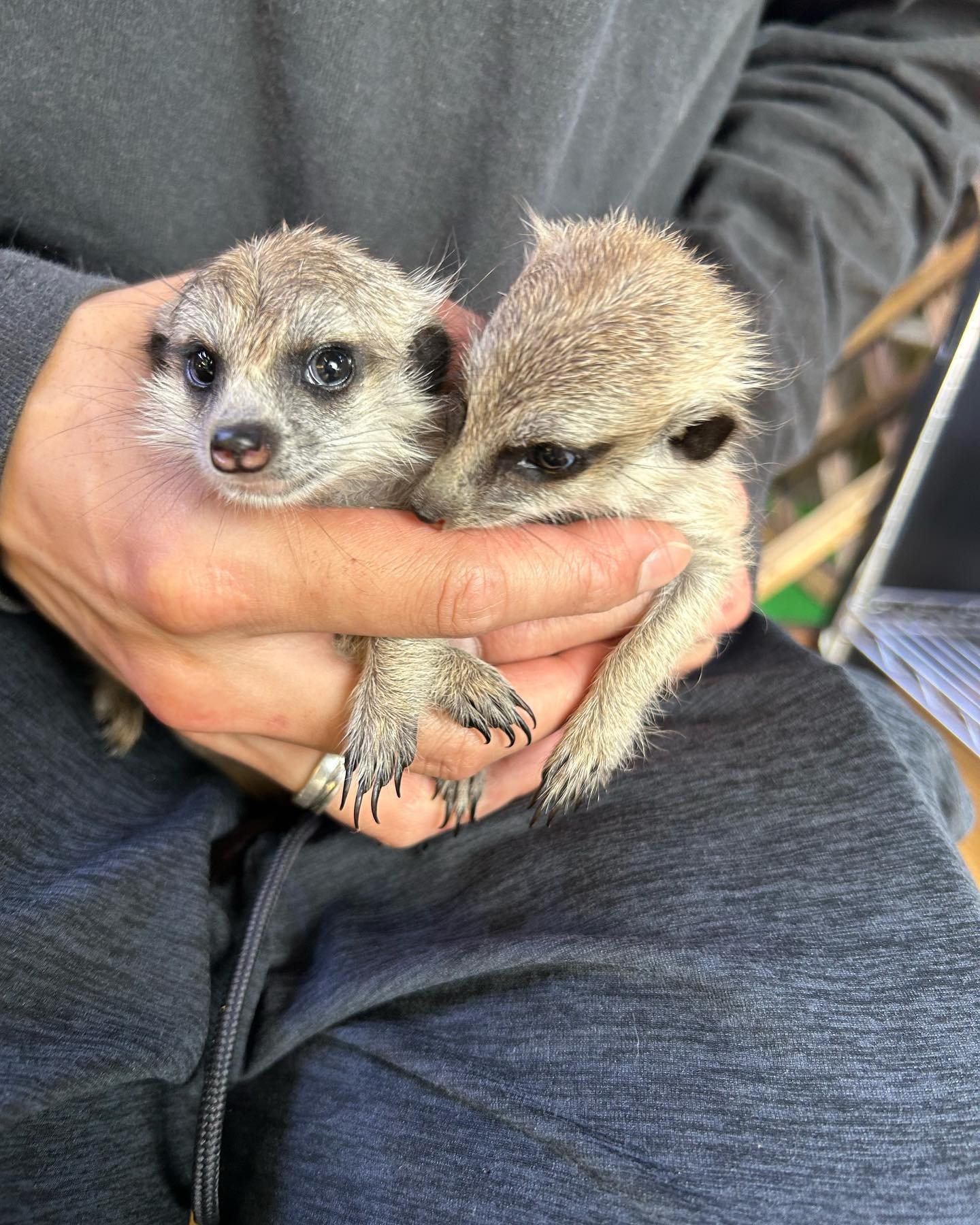

Baby Meerkats (Suricata suricatta)
Young Members of an Exceptionally Social Species
With their alert expressions, delicate features, and characteristic upright posture, baby meerkats offer an early glimpse into the fascinating social world of one of Africa’s most recognizable small carnivores.
Native to the arid landscapes of southern Africa, meerkats are highly cooperative members of the mongoose family. They live in structured social groups, commonly known as mobs or clans, where individuals participate in activities such as foraging, burrow maintenance, and watching for potential threats.
During their early development, young meerkats gradually acquire the coordination, awareness, and behavioral skills needed to navigate their environment. Learning through observation and social interaction plays an important role in their development, particularly as they begin exploring beyond the safety of their burrow.
SPECIES OVERVIEW
– Common Name: Meerkat
– Scientific Name: Suricata suricatta
– Family: Herpestidae
– Origin: Southern Africa
– Natural Habitat: Open plains, scrublands, and semi-arid regions
– Diet: Primarily insects, supplemented by small vertebrates and other invertebrates
– Social Structure: Cooperative, group-oriented communities
– Recognizable Features: Dark eye patches, slender bodies, pointed muzzles, and strong digging claws
Meerkats have specialized social, nutritional, and environmental needs. Their welfare requires expert care, suitable social arrangements, appropriate space for natural digging behaviors, and veterinary oversight.
Reviews
There are no reviews yet.